Translation incomplete
Some parts of this page have not been translated yet and may appear in the original language. We appreciate your patience as we continue to update our content.
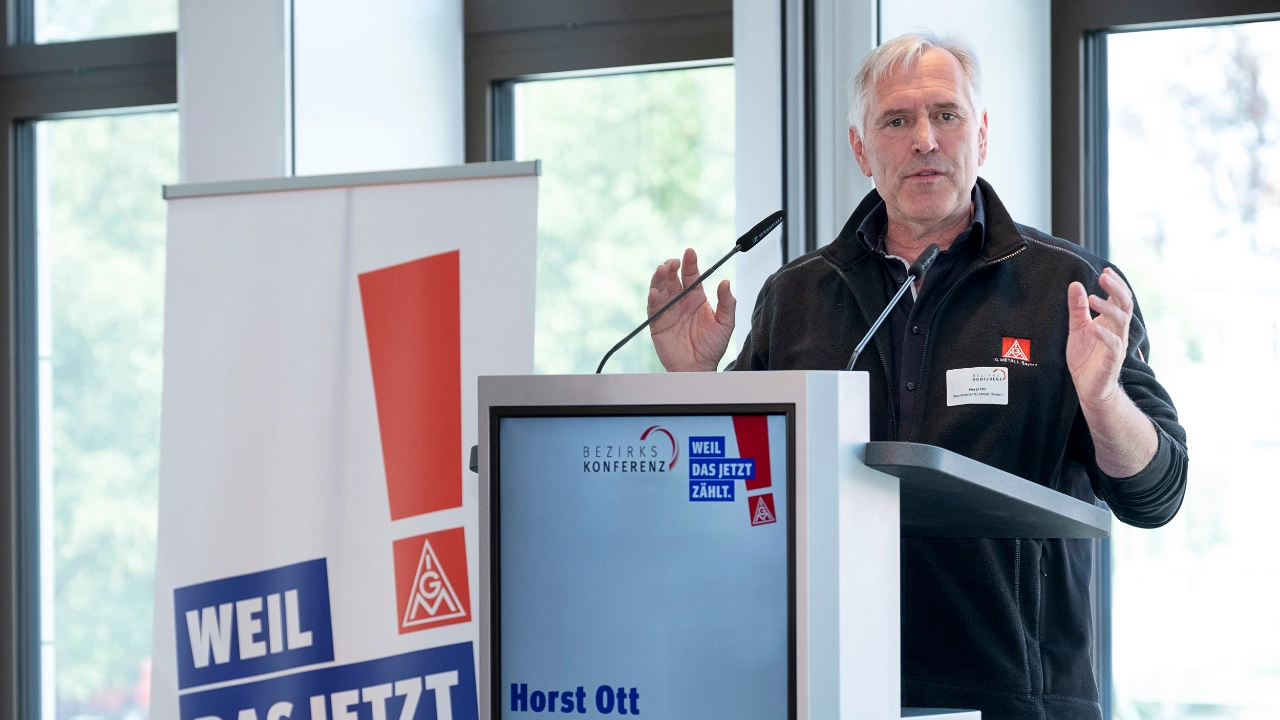
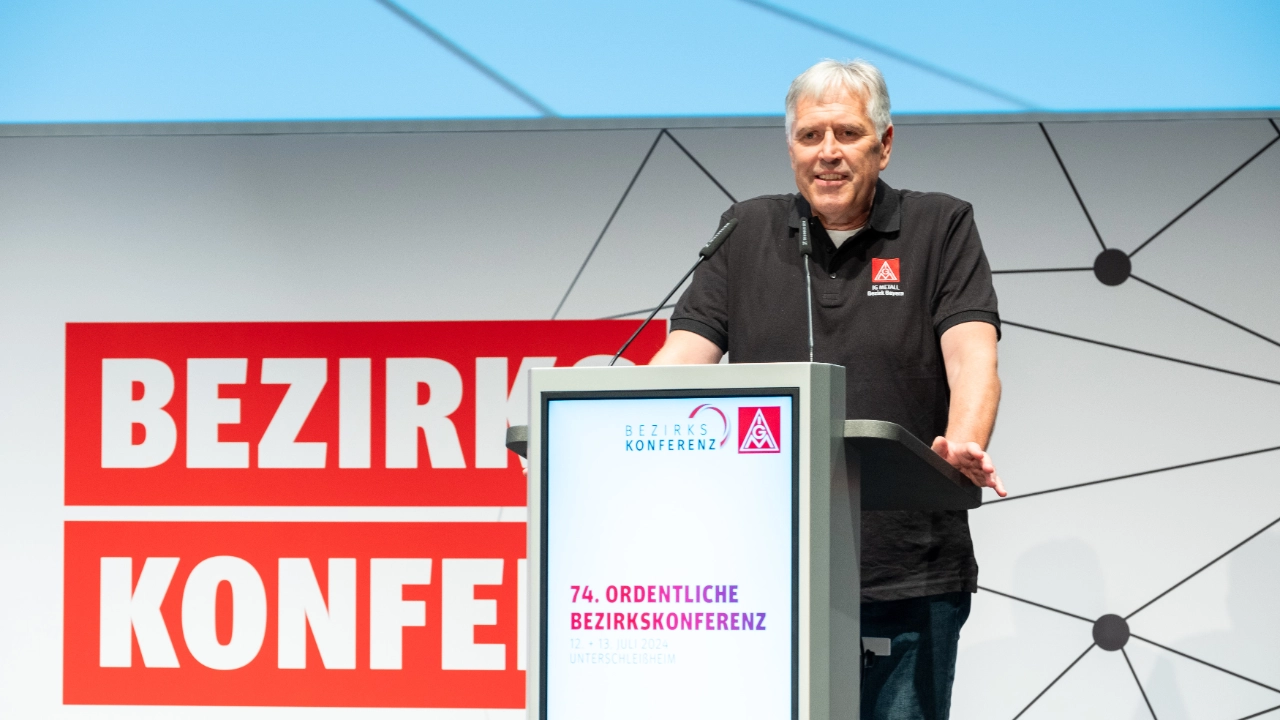
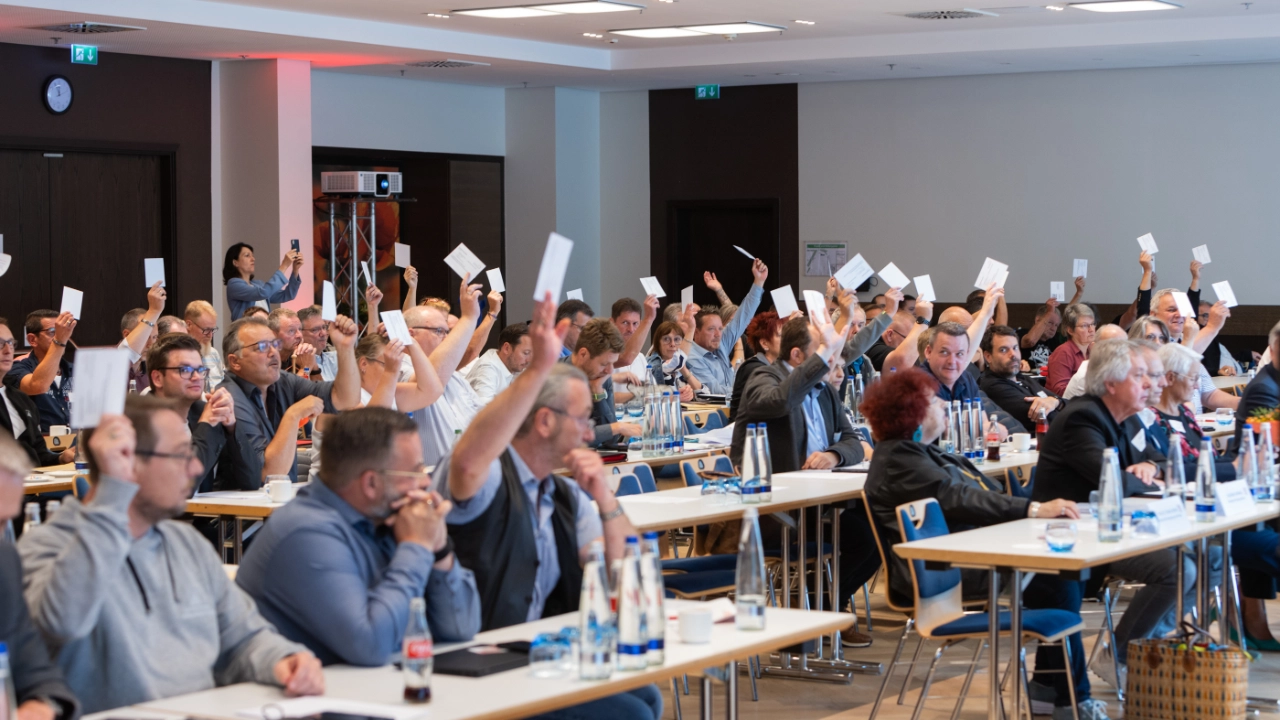
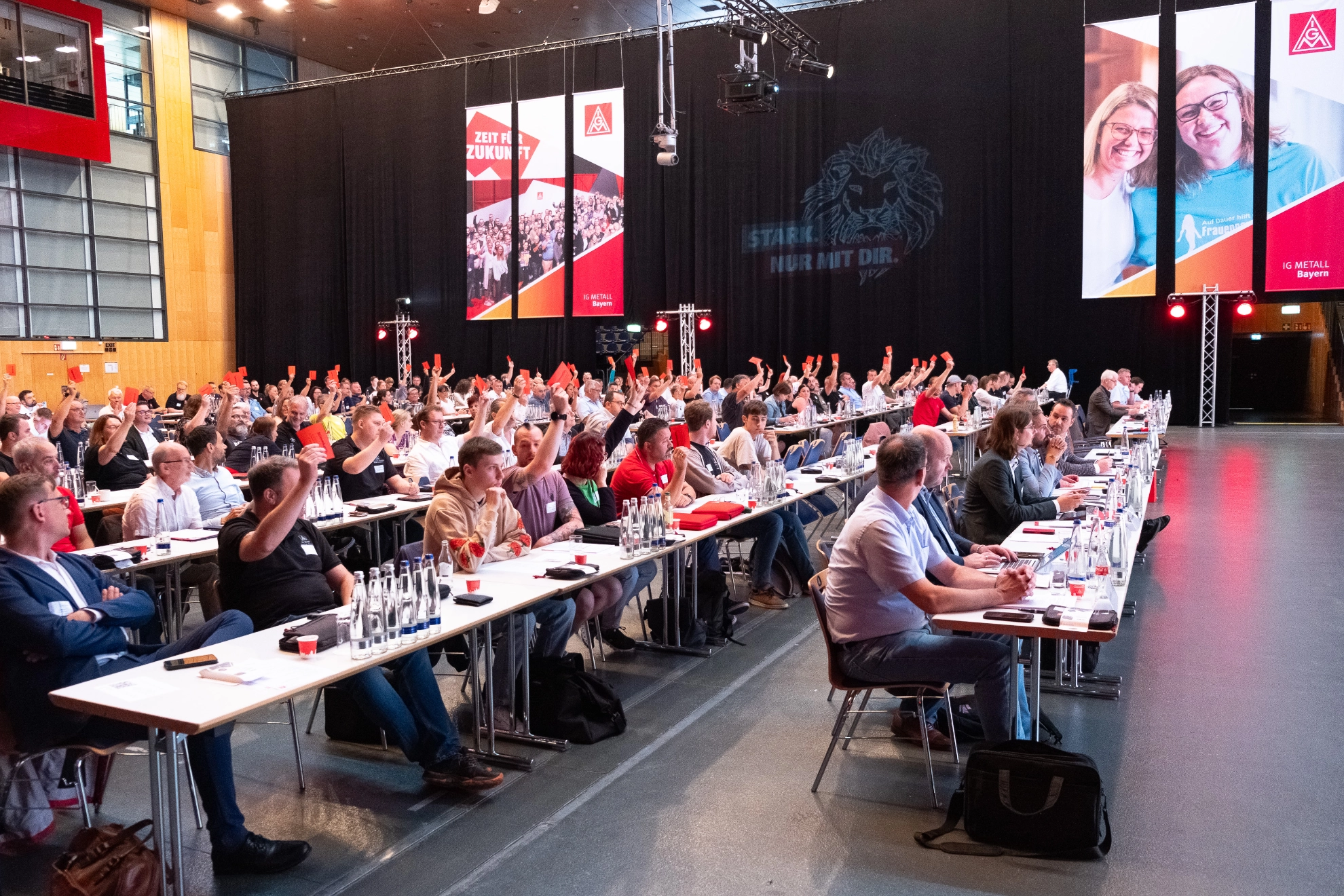
Bezirkskonferenz 2024 der IG Metall Bayern

Über uns
Gremien & Aufbau

Die Bezirkskommission berät mit dem Bezirksleiter die gewerkschaftlichen Angelegenheiten in Bayern. Zudem entsendet der Bezirk Bayern Mitglieder in den Beirat und den Vorstand der IG Metall.

Bezirkskommission Bayern

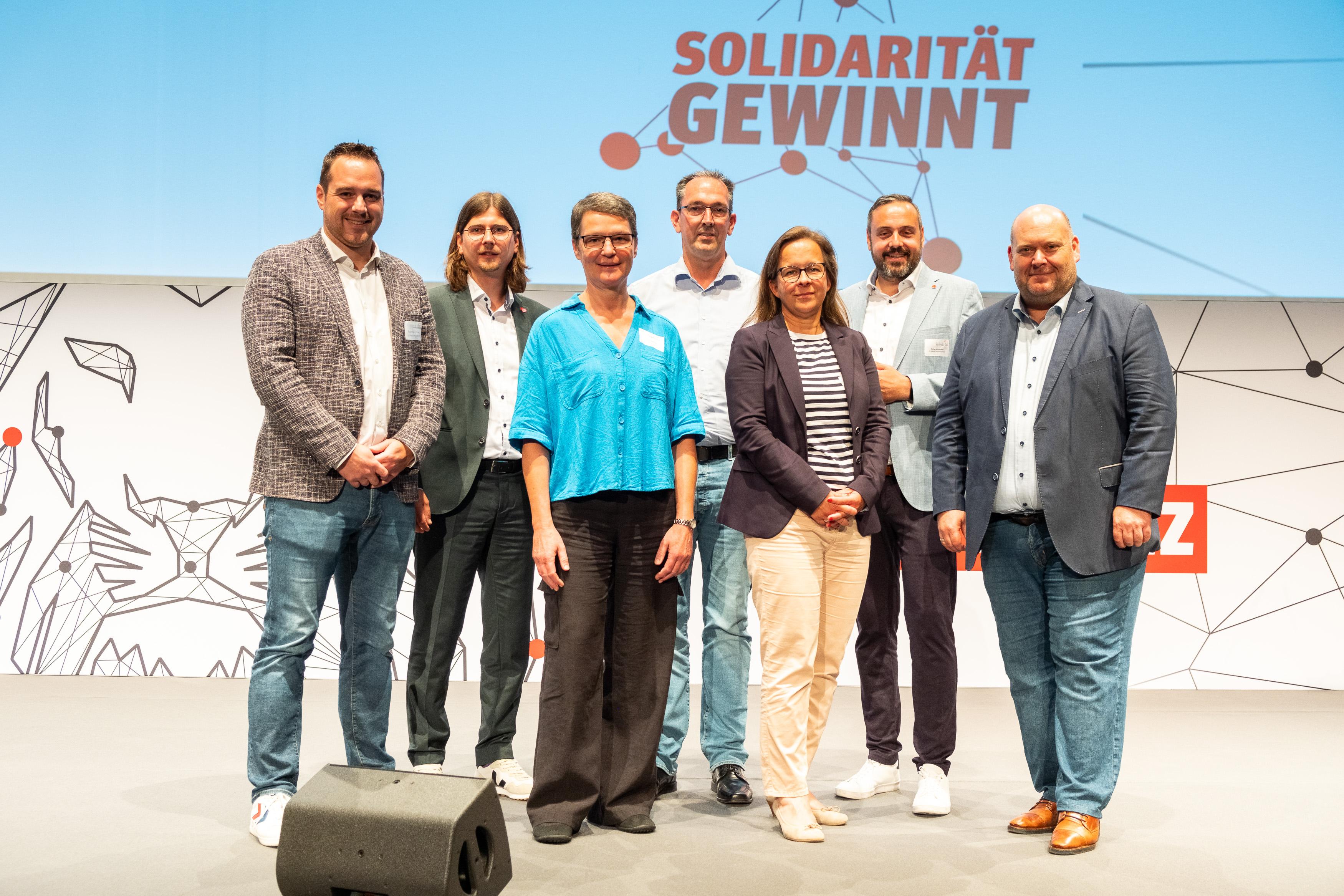
Die Bezirkskommission berät mit dem Bezirksleiter die gewerkschaftlichen Angelegenheiten in Bayern, kontrolliert die Finanzen des Bezirks und schlägt dem IG Metall-Vorstand Personalia vor. Die Mitglieder der bayerischen Bezirkskommission:

Andreas Domke, Airbus Defence and Space GmbH Manching, Betriebsratsmitglied und Vertrauenskörper-Leiter

Sigrid Heitkamp, Siemens Mobility GmbH Erlangen, Betriebsratsvorsitzende und Bezirksfrauenausschuss

Sascha Hübner, manroland Goss web systems GmbH, Augsburg, BR-Vorsitzender

Rico Irmischer, 1. Bevollmächtigter IG Metall Regensburg

Susanne Tauber, Richard Bergner Holding Schwabach, BR-Vorsitzende

Stefan Winnerlein, 1. Bevollmächtigter IG Metall Ostoberfranken

Thomas Zitzelsberger, BMW Dingolfing, Betriebsratsmitglied und Vertrauenskörper-Leiter


Bezirkskommission Bayern


Beirat (Mitglieder aus Bayern)

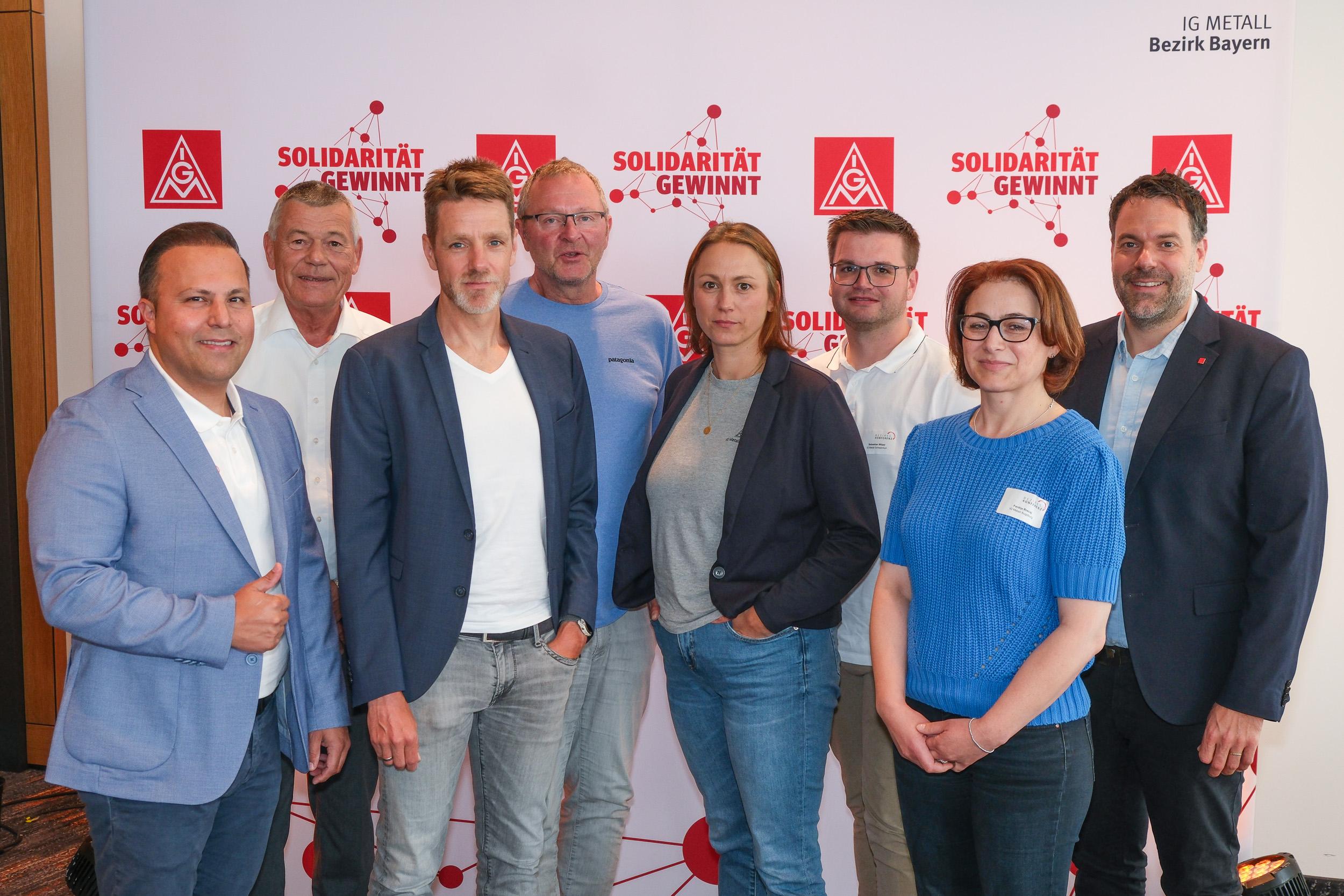
Der Beirat der IG Metall ist das bundesweit höchste beschlussfassende Gremium zwischen den Gewerkschaftstagen. Die bayerischen Mitglieder des Beirats:

Stephanie Eberherr, Dr. Johannes Heidenhain GmbH, Traunreut, stellv. Betriebsratsvorsitzende

Michael Faltermeier, BMW Regensburg, Vertrauenskörperleiter

Udo Fechtner, 1. Bevollmächtiger IG Metall Amberg

Benjamin Freund, 1. Bevollmächtigter IG Metall Landshut

Klaus Friedrich, Bosch Rexroth AG Lohr am Main, Betriebsratsvorsitzender

Valeria Gorschunow, BMW München, Vertrauenskörperleiterin

Thomas Höhn, 1. Bevollmächtigter IG Metall Schweinfurt

Ferdije Rrecaj, 1. Bevollmächtigte IG Metall Augsburg

Jasmin Steinert, 1. Bevollmächtigte IG Metall Allgäu

Cengiz Ünsal, BMW München, Betriebsrat

Anton Weber, Rodenstock Regen, Betriebsratsvorsitzender

Sebastian Witzel, SKF Schweinfurt, stellv. Betriebsratsvorsitzender


Beiratsmitglieder aus Bayern


Ehrenamtlicher Vorstand (Mitglieder aus Bayern)

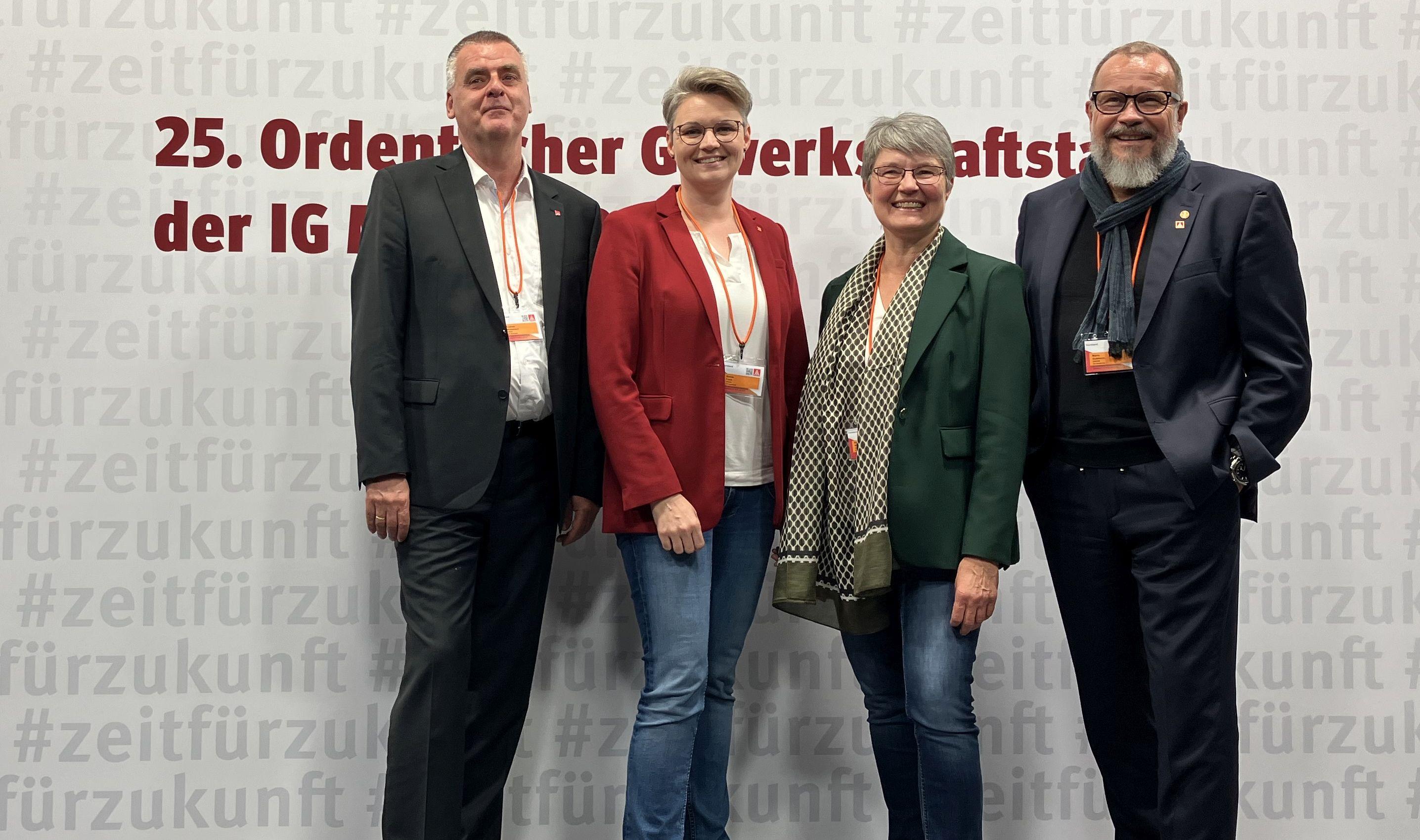
Der Vorstand der IG Metall setzt die Beschlüsse des Gewerkschaftstages um, kündigt Tarifverträge, bestätigt Tarifabschlüsse und entscheidet über Urabstimmung und Streik. Der Vorstand besteht aus den fünf geschäftsführenden und 29 ehrenamtlichen Vorstandsmitgliedern.

Karola Frank, Audi AG Ingolstadt, Vertrauenskörperleiterin und stellv. Betriebsratsvorsitzende

Mario Gutmann, Bosch Bamberg, Betriebsratsvorsitzender

Sibylle Wankel, 1. Bevollmächtigte IG Metall München

Andreas Weidemann, 1. Bevollmächtigter IG Metall Nürnberg

Andreas Weidemann, Karola Frank, Sibylle Wankel und Mario Gutmann
Die Bezirkskonferenz wählt die Gremien
IG Metall—A Democratic Organization
The History of the Labor Movement
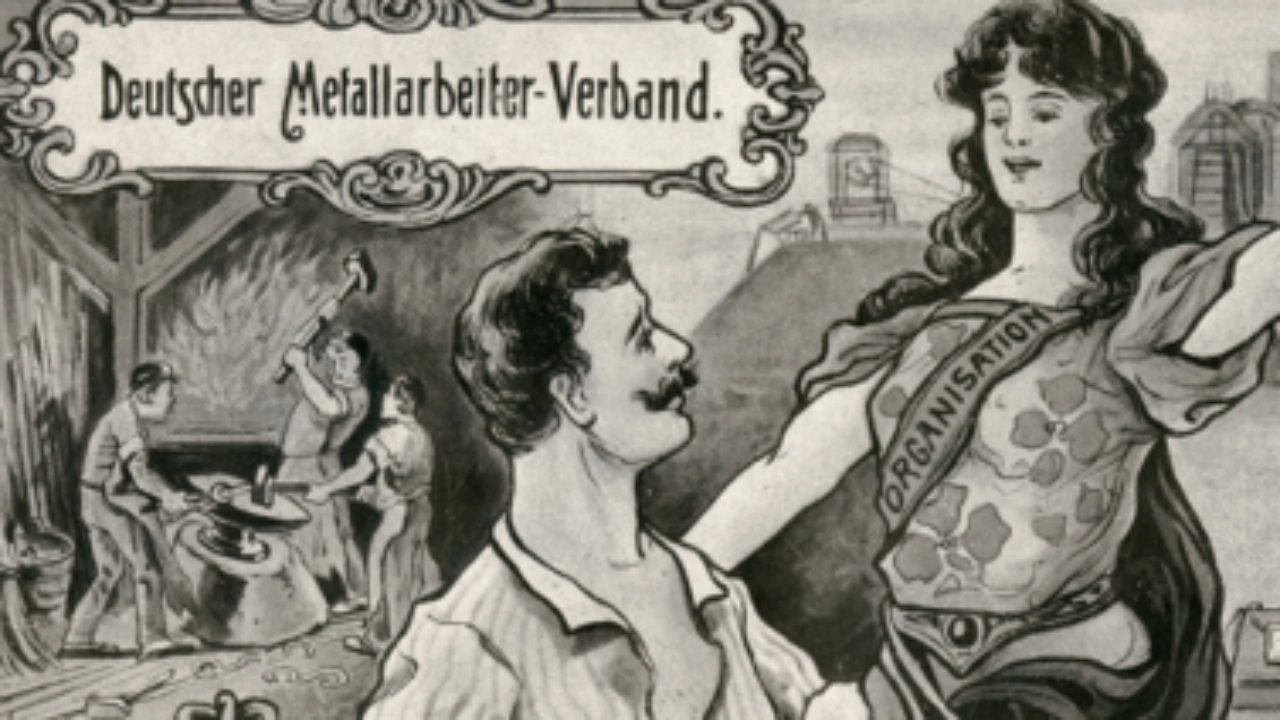
Ausschnitt einer Publikation des Deutschen Metallarbeiterverbandes.

19th Century

Starting in the 1830s, industrialization transformed the world of work: mass production replaced artisanal craftsmanship, and machines set the pace. The working class had no protections or rights. For a pittance, adults and children toiled 14 hours a day or more in the factories. Resistance was suppressed by a police state. Yet the workers organized themselves. (Photo: IG Metall)
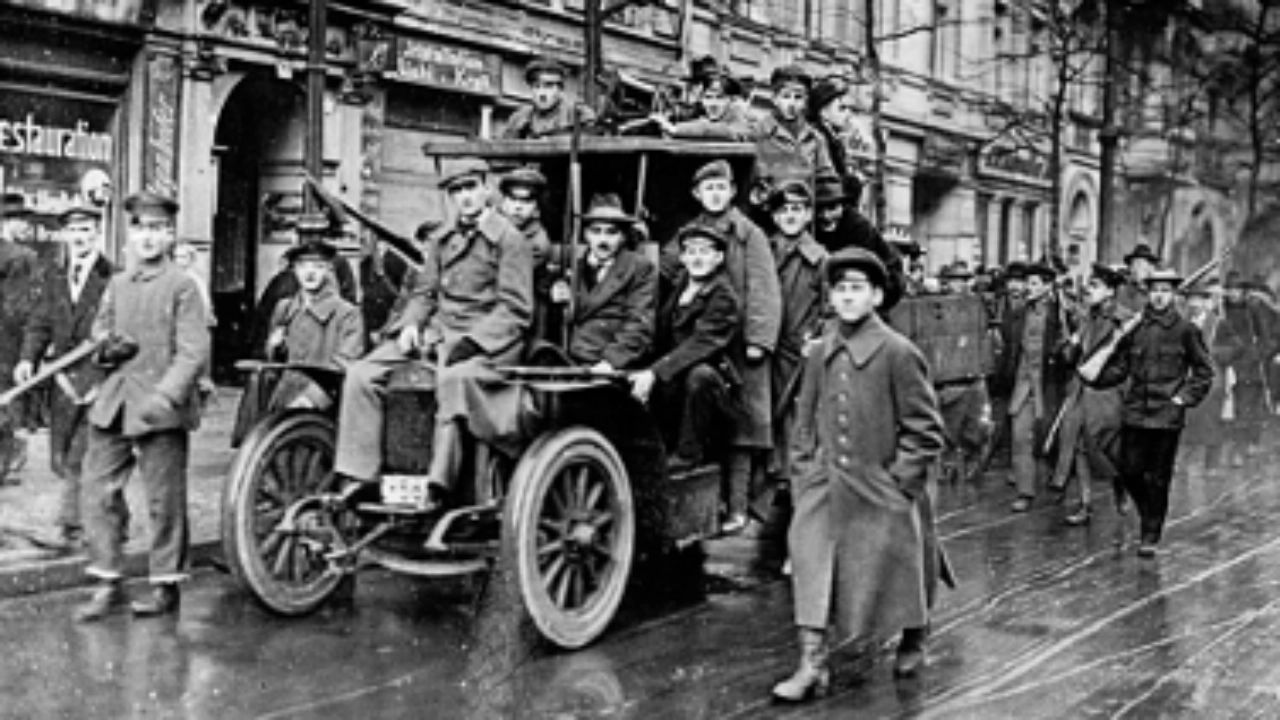
100 Jahre Novemberrevolution

Turn of the Century

As industrialization progressed, the plight of the working class worsened. But the unions fought back, demanding shorter workdays and free time for physical recovery. From 1910 to 1913 alone, there were around 9,000 strikes involving more than one million participants. It was not until the November Revolution that the eight-hour workday for all—six days a week—was achieved. (Photo: Berliner Verlag/Archive/pa)
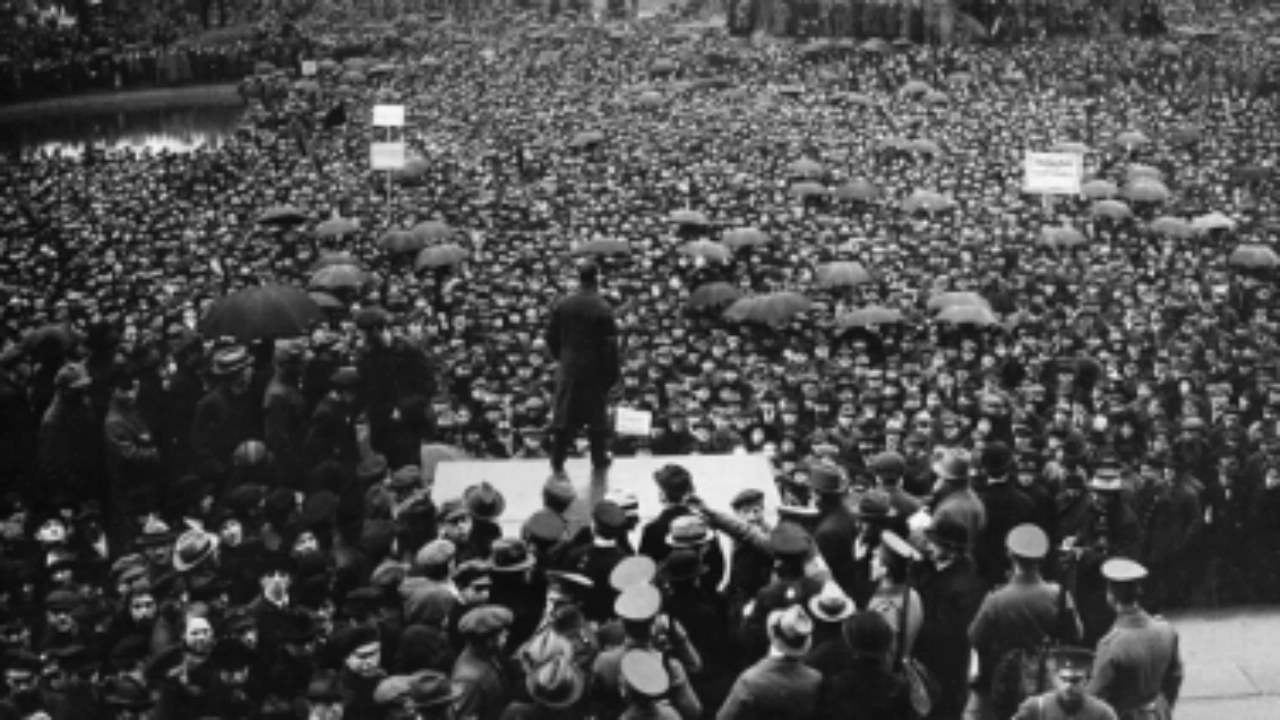
Kundgebung anlässlich des Betriebsrätegesetz 1920.

The 1920s

The Works Council Act of 1920 guaranteed the rights of employees in the workplace. Employers repeatedly sought to undermine the eight-hour workday. The unions fought back in fierce labor struggles. Yet internal conflicts arose within the working class. The Great Depression, inflation, and unemployment strengthened nationalist forces. (Photo: picture-alliance/akg-images)
Ein Stacheldrahtzaun.

1933–1945

The National Socialists’ seizure of power marks the provisional end of free trade unions. On May 2, 1933, the fascists stormed the union headquarters—those who could not flee were arrested, tortured, and murdered. Many union members managed to go underground. From there, and even while in captivity, they continued to resist. (Photo: iStock/ChiccoDodiFC)
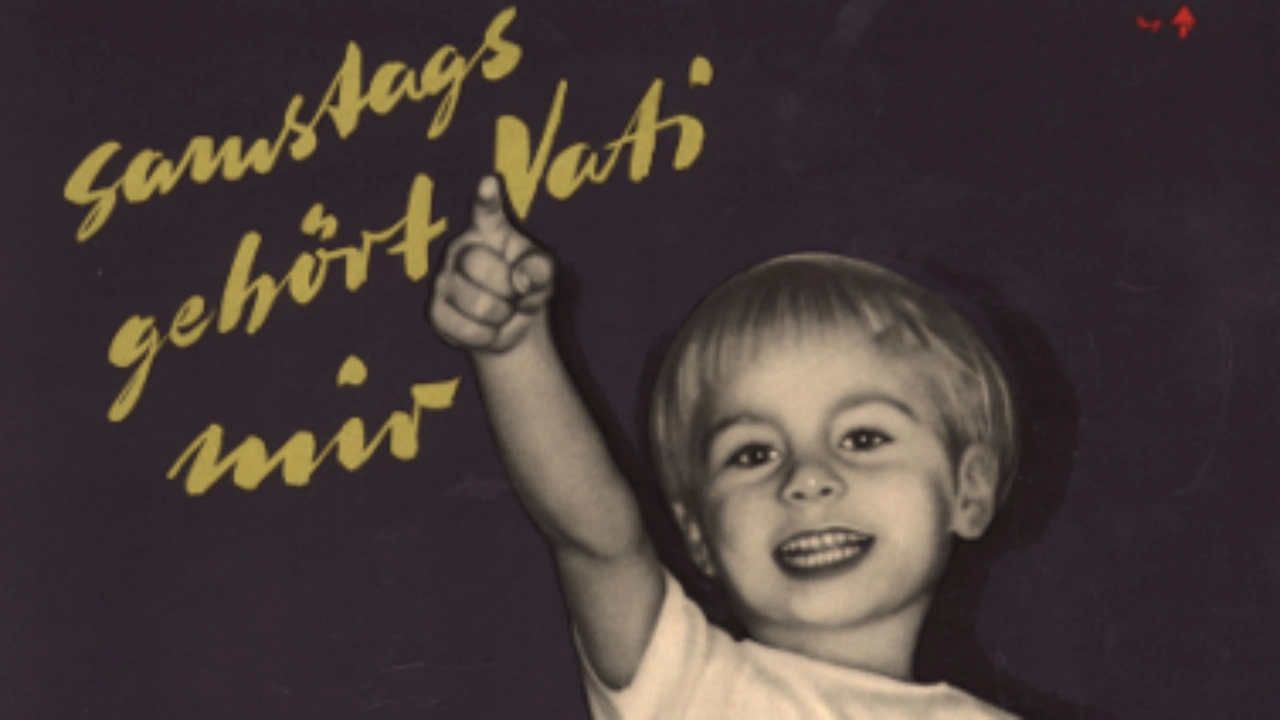
Plakat von 1956 zur Fünftagewoche.

Postwar period and the 1950s

Workers and their works councils rebuilt the companies. In 1949, IG Metall was founded on the principle of a unified trade union—thus ending the division of the working class into Social Democrats, Communists, and Christians. In 1956, IG Metall secured the five-day workweek and fought for continued pay during sick leave for blue-collar workers as well. (Photo: DGB)
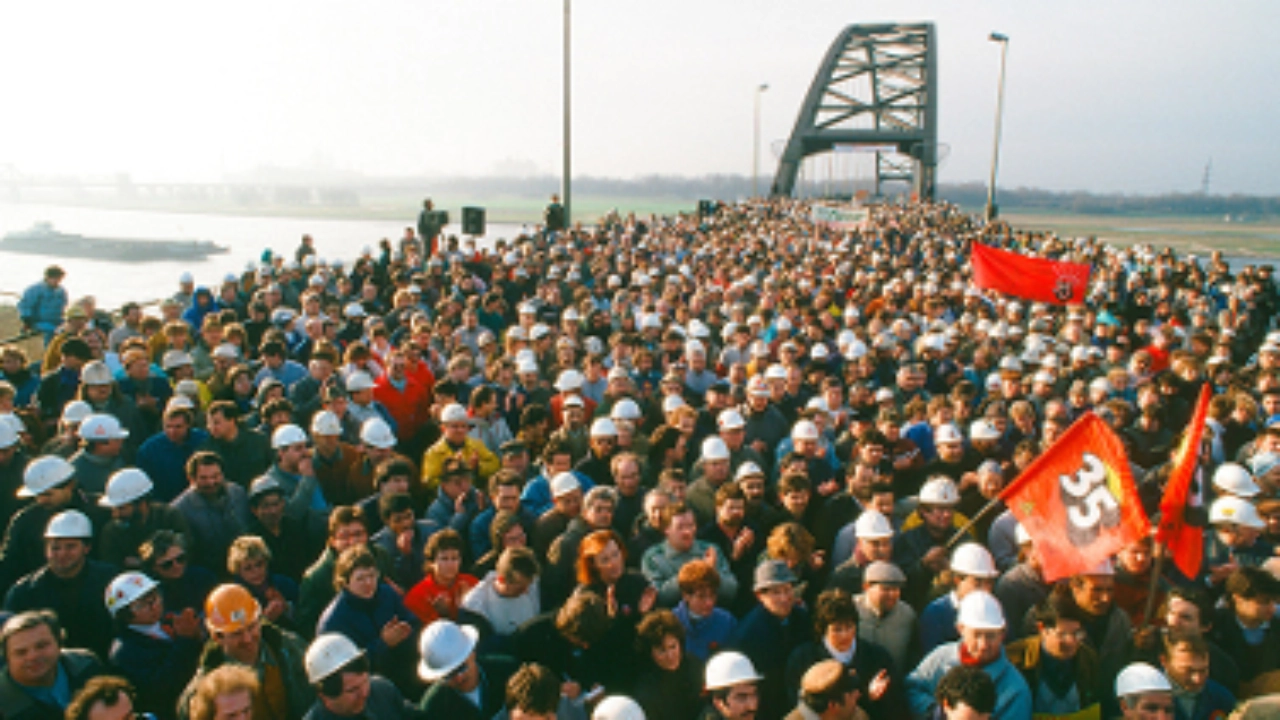
Stahlarbeiter demonstrieren 1988 auf der Brücke der Solidarität gegen die Schließung des Stahlwerks Duisburg-Rheinhausen

The 1960s through the 1980s

These years were marked by struggles for higher pay, more free time, and democracy in the workplace. IG Metall secured double-digit wage and salary increases and pushed through shorter work hours, more vacation time, and vacation pay. Union representatives were empowered and protected by collective bargaining agreements. In 1984, the transition to the 35-hour workweek was successfully implemented. (Photo: IG Metall)
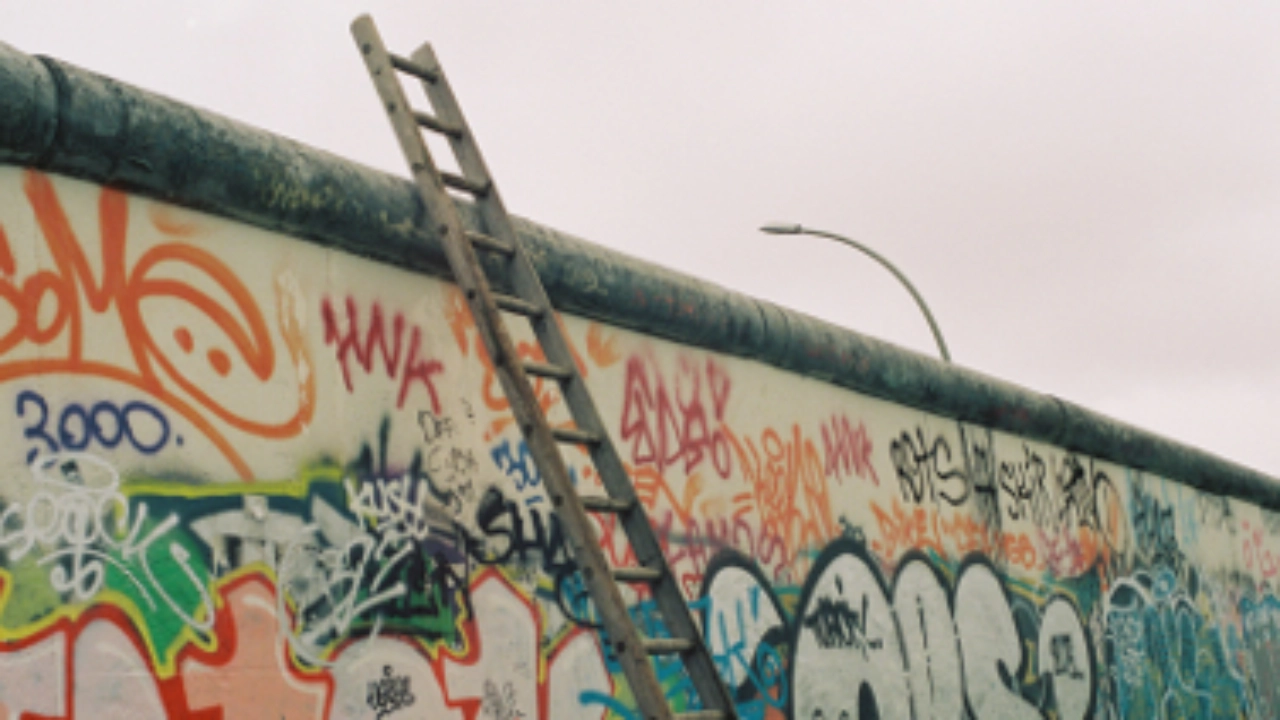
Eine Leiter lehnt an der Berliner Mauer.

The 1990s

After reunification, East German industry collapses. Millions of jobs are lost. The ensuing crisis and rising unemployment define the decade. Joining forces becomes necessary: IG Metall merges with the Textile and Apparel and Wood and Plastics unions. (Photo: iStock/NatalyaLucia)
Ein Hochhaus in Frankfurt am Main.

The Turn of the Millennium

Job security, partial retirement, the hiring of trainees, and the fight against the abuse of temporary agency work are key priorities in the new millennium. During the 2009 financial and banking crisis, collectively bargained short-time work and reduced working hours with partial wage compensation prevent the worst effects on workers in Germany. (Photo: iStock/bluejayphoto)
Digitalisierung und Industrie 4.0

Today and Tomorrow

Now more than ever, it is essential to embed employee participation in the workplace. Collective bargaining coverage, greater equity in the workplace and society, the right to training, greater control over one’s own time, and shaping the digital world of work and the ongoing transformation are major challenges. We are rising to them. (Photo: IG Metall)
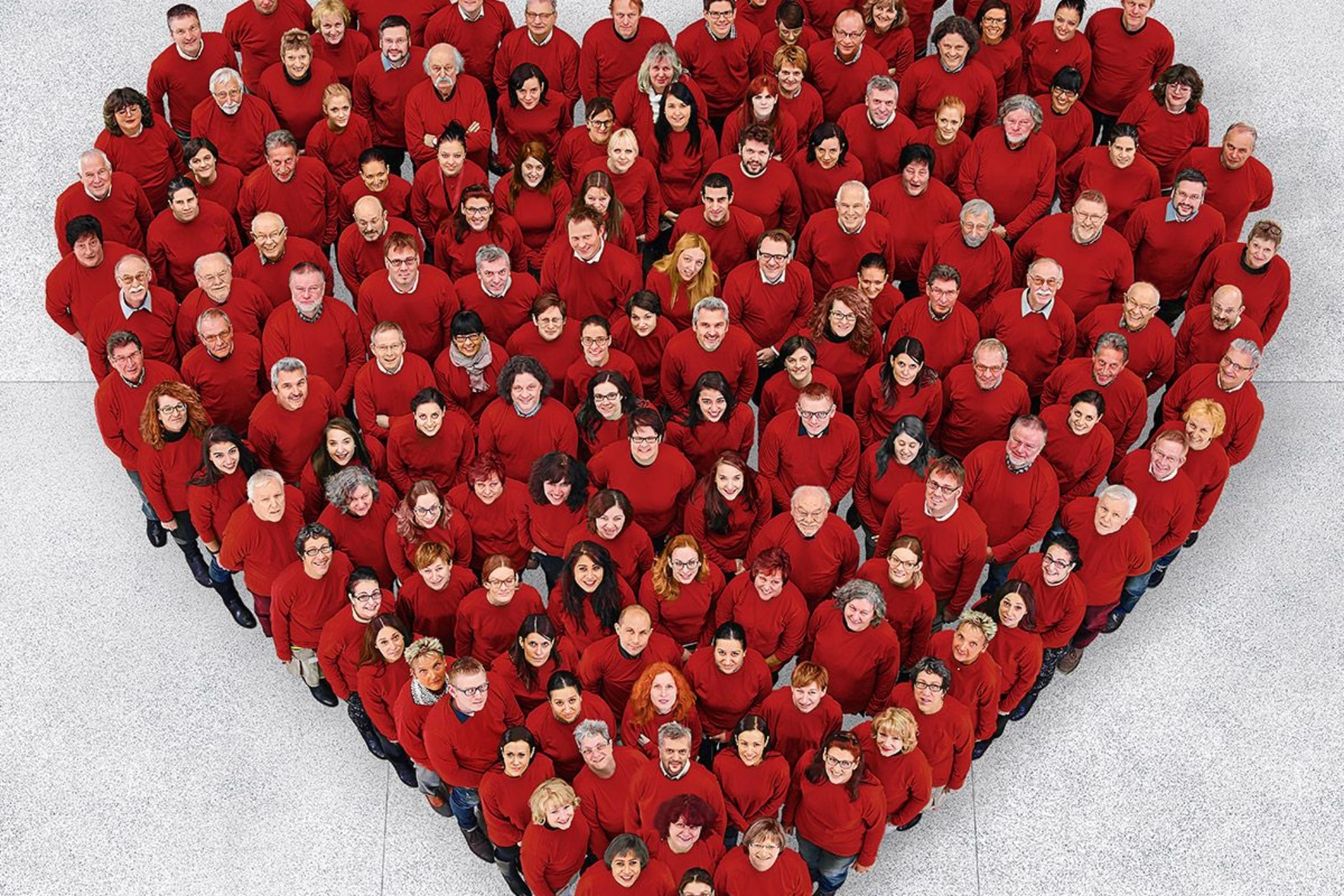
Beschäftigte stehen zu einem großen Herz zusammen
Become a member
Become part of a strong community

From legal protection in labor and social law matters to fair wages and salaries—we take personal and reliable care of our members.

Subscribe to the newsletter